
Solutions
For enterprises and corporates
A strategy approved by the board, capital committed across subsidiaries, and a reporting pack rebuilt by hand every quarter. The platform holds the link between the three.
The strategy is approved, the spend is committed, and nobody can connect the two
A group runs initiatives across business units and subsidiaries, each with its own plan, its own project managers and its own spreadsheet. The strategy is approved and published. The capital budget is approved separately. The question "which objective is this spend buying" is answered once a year, in a deck, from numbers assembled by hand.
By the time the board pack is written, the data is a month old, the definitions differ between units, and the one thing leadership wants to know, whether the plan is still deliverable, is a matter of opinion.
From the board's objective to the work that delivers it
- Strategy across the group
- Objectives cascaded to business units and subsidiaries, each with an owner, so the same plan is read the same way everywhere.
- Investment and project portfolios
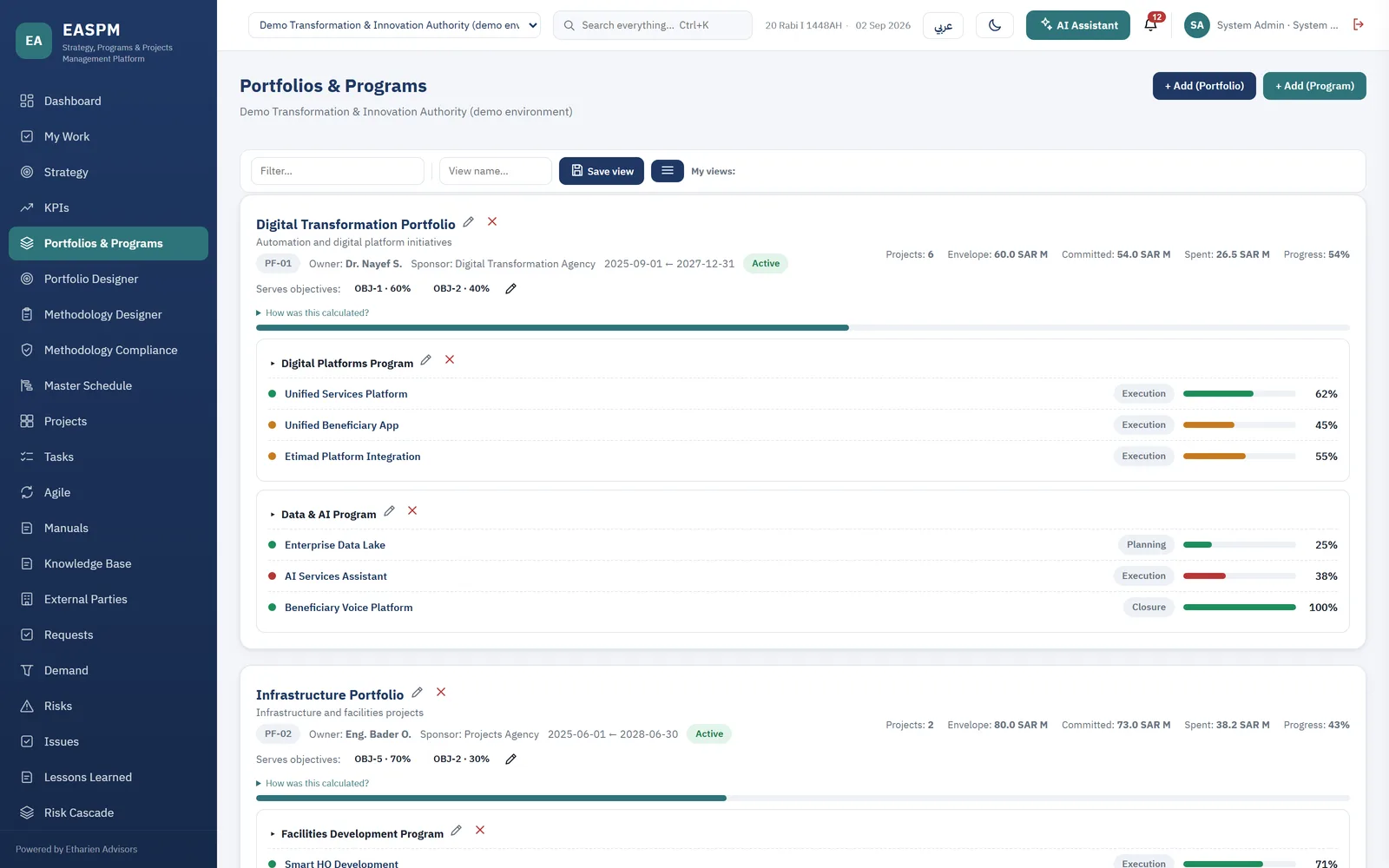
- Demand, selection criteria, prioritisation and stage gates, with the portfolio's health read from the same record as the plan it serves.
- Value, not only progress
- Earned value against the status date, and the benefit each initiative was approved to deliver tracked after it closes, not only until it closes.
- Capacity and skills
- Who is available, who is qualified, and what a proposed portfolio would demand of them before it is committed.
- Contractors and vendors
- An external-party portal for progress and risk updates within defined permissions, instead of email and attachments.
- Board and executive reporting
- The pack generated from the same data the teams work in, in Arabic or English, with the arithmetic behind every figure available.
What the chain looks like in practice
A strategic objective to grow a line of business. It is measured by an indicator the board agreed. Three initiatives serve it: one in a subsidiary, two in the parent, each with a budget, a gate schedule and a named owner. A slip in the subsidiary shows on the group indicator the same week, and the reason is the contractor's own update rather than a summary of a summary. When an initiative closes, the benefit it was approved to deliver stays under measurement instead of disappearing with the project.
The example is fictional and is shown in the demo session on a scenario from your own sector.
What the group keeps control of
Each business unit works in its own environment with its own data, configuration and branding, and no unit's data is visible to another. Roles decide what a person can see and change, and every approval is recorded with who decided and when.
The methodology stays yours. Stage gates, prioritisation criteria and the definition of a benefit are configured to the group's own governance rather than to a vendor's opinion of it. Security and hosting.
One portfolio or one subsidiary first
- 01
Demonstration session
A walkthrough on data from a fictional group, followed by an open discussion of what fits and what does not.
- 02
Current-state diagnostic
Where the strategy lives today, where the capital plan lives, where delivery is reported, and where the chain breaks.
- 03
Pilot environment
One portfolio or one subsidiary, with your data, your gates and your definitions.
- 04
Go live and scale
Load the plan and the portfolios, train the teams and the external parties, run one full reporting cycle, then expand across the group in stages.